
Rich or Poor, We All Share the Same Fate
The art of maintaining a life in a world obsessed with maximizing one

Hi everyone. There’s a lot happening in the world right now, and not much of it feels very uplifting. When I find things start to feel overwhelming, I find that it helps to focus on the small things at hand, which is kind of what this post is about. Just think of Anne Lamott’s classic writing advice to take things “bird by bird.” I hope it gives you something small but worthwhile to think about for a moment.
In this edition:
What we can learn from a legendary solo sailing race around the world.
The systems we spend our lives maintaining: body, lifestyle, work, status, wealth, relationships, time and meaning.
The tao of the janitor: why meaning comes less from “maxxing” and more from maintaining.
“You should consider that the essential art of civilization is maintenance.”
- Pete Seeger
Few of us will find ourselves traveling across the globe alone in a small boat. But that doesn’t mean we can’t relate to the journey. After all, we sail around this globe roughly 80 times on our own proverbial boats we call lifetimes — and they both hinge on the very same responsibility.
It’s a responsibility wonderfully illustrated in the 1968 Golden Globe Race, which was a challenge to be the first person to sail solo, nonstop around the world.
Two sailors defined the race. Robin Knox Johnston, a conventional British sailor, set off earliest in a slow, leaking wooden boat, spending much of the voyage fixing things. He patched planks underwater while dodging sharks, melted solder from light bulbs to repair his radio.
His rival, the French philosopher-sailor Bernard Moitessier, took the opposite approach: simplify until there’s almost nothing left to break. He stripped his steel boat of its engine, electronics, extra anchors and chains, reasoning that a steel hull wouldn’t leak and no radio meant no battery problems.
The race was neck-and-neck until Moitessier, rounding Cape Horn, made a stunning decision. He didn’t want to go back. Instead, happy at sea and tired of the life he’d been living (and apparently his wife), he sailed on to Tahiti, while Knox Johnston arrived home to cheering crowds, the first man ever to circle the globe without stopping.
But the race is not the point of the story.
As told by writer and futurist Stewart Brand in all its technical, minute glory, the deeper theme running through this around-the-world adventure is MAINTENANCE.
As Brand beautifully observes in The Maintenance of Everything:
“Maintenance is what keeps everything going. It’s what keeps life going.”
We bring nothing into the world, and we take nothing out of it. Over the course of a life, we’re just maintaining things.
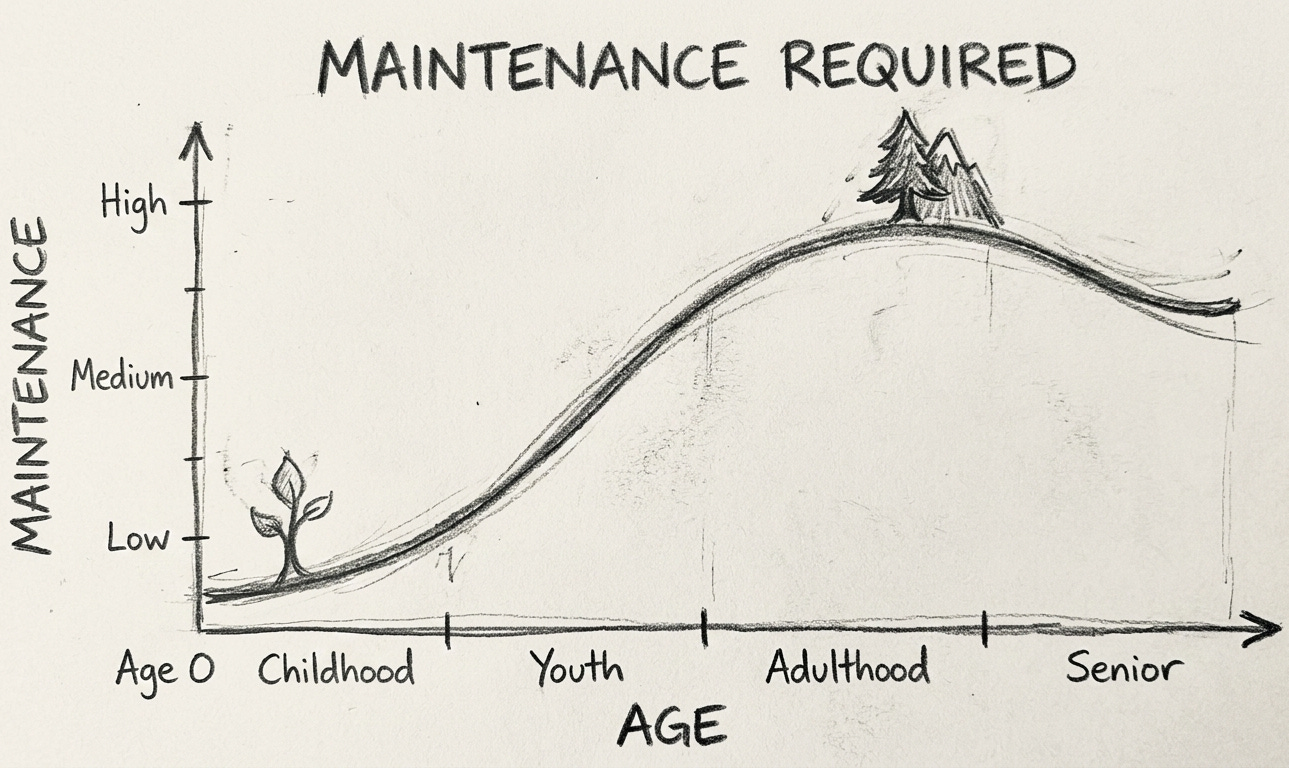
I consider this a transformative message at a time when societal norms push us to compare our lives to those we find online and strive for perfection — whether it’s beauty, fame, wealth, whatever. Some people even report suffering from money dysmorphia, feeling an intense pressure to get rich.
To embrace a humble life of maintenance is a radical idea in this era of “maxxing.”
I’d argue it’s better to focus on the smaller things, to maintain what’s in front of you instead of chasing some kind of unrealistic ideal promoted on social media.
There’s value in thinking less about the pursuit of maxxing and more about the quieter art of maintaining. Because you can build all kinds of wealth through relentless, consistent maintenance.
Maintenance all the way up
Brand writes:
“Nearly everything worth maintaining is nested in something larger even more worth maintaining.”
To meditate on it is to realize just how right he is. Our lives, fated to maintenance, take on almost a Russian doll structure. Through which the thread of money flows, woven together by how you maintain your attention.
Which raises the question: what are you spending your life maintaining?
The body
Arguably, we spend most of our effort maintaining the things we get around in — our bodies.
As Mierle Laderman Ukeles, creator of “maintenance art,” wrote:
“Maintenance has to do with survival, with continuity over time.”
We spend about a third of our lives recharging in the form of sleep. On top of that is another four years or so fueling ourselves.
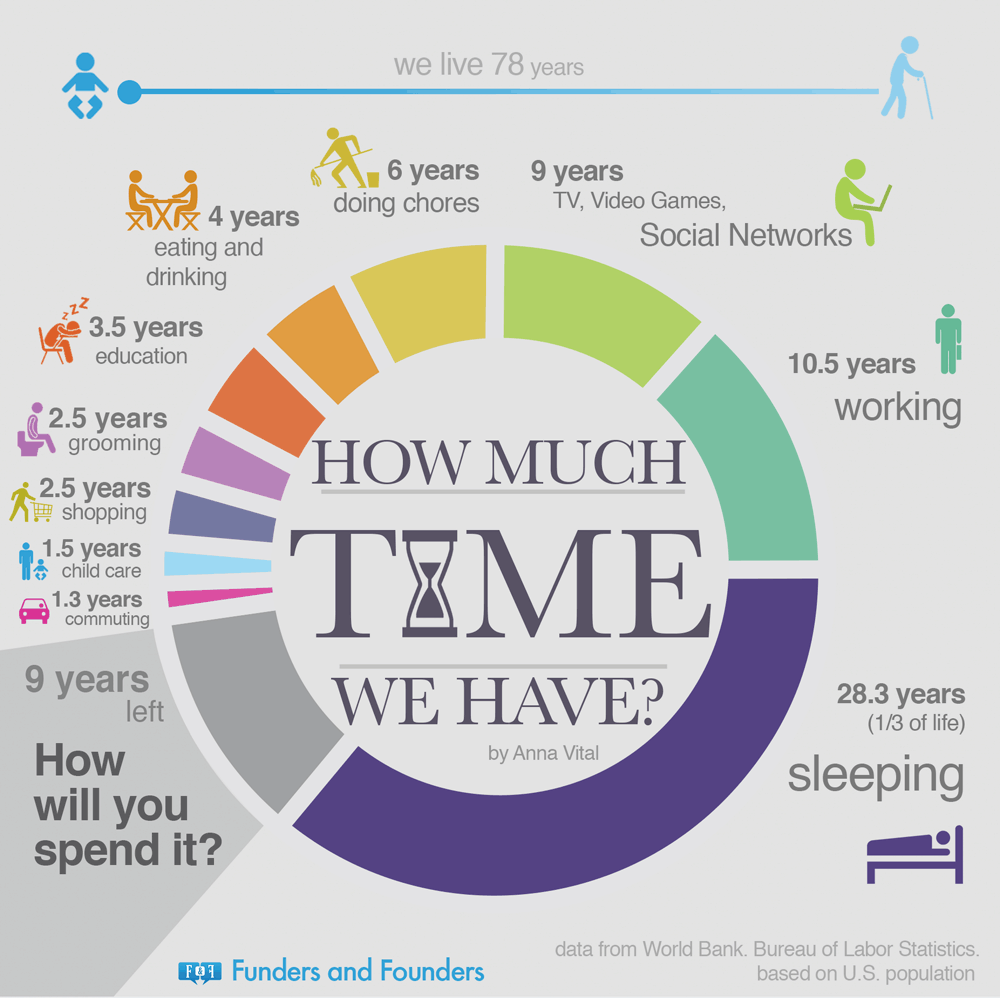
A significant portion of our wealth is dedicated to the body — either for survival or vanity.
Spending on health care is more than $5 trillion in the U.S. Plus, the average American spends $5,300 on wellness. Perhaps the face of extreme wellness is Bryan Johnson, the entrepreneur committed to spending millions in an attempt to live forever.
Yet research consistently shows the real foundations of health and longevity are basic habits — not smoking, regular exercise, adequate sleep, healthy diet, yada yada. Habits for maintaining health that are, essentially, free. It’s all the things that are as unexciting as maintenance itself, yet just as necessary.
The lifestyle
Take a step outward and we arrive at the ongoing maintenance of lifestyle.
Lifestyle includes everything from how we dress to what we drive to the activities we fill our time with. These things can enrich life. But left unchecked, lifestyle has a tendency to grow like weeds, slowly choking the rest of the garden.
One place this becomes obvious is housing. For most people, the largest item in the budget is a mortgage or rent payment.
We’re often sold the idea that bigger is better — until it exceeds our ability to maintain it, both physically and mentally.
As a Washington Post columnist noted:
“Humans aren’t very good at prioritizing what makes them happy, economists say, especially when it comes to living arrangements. We systematically overlook the costs (mortgages, commuting, maintenance) while dramatically undervaluing intangible benefits that actually dictate our happiness (seeing our kids at night, hanging with friends, knowing our neighbors and walking places).
It’s not that big houses make us unhappy. It’s what we give up in pursuit of them. That’s why so many people can end up house-rich but relationship-poor, vaguely unsatisfied in their bigger homes.”
The work
Bringing life to the lifestyle is work, or the maintenance of a career, a job, a craft.
We’re often told we can either “work to live or live to work.” I’d argue both ideas miss something important when you consider it’s the second thing we spend most of our lives doing.
Certainly, a job is important for money. There’s an admirable virtue in doing what you need — whether hard labor or high-intensity investment banking — to create the outside life you want and provide for others.
But there’s also something to be said about how much you want your decisions to be driven by external motivations.
In my experience, to hate your job means having to do maintenance on your stress outside of work to make up for the dissatisfaction within it. When so much of our identity is tied to work, it stands to reason that things like meaning and enjoyment weigh nearly as much as the paycheck.
The psychologist Carl Jung concluded:
“The world is full of people suffering form the effects of their own unlived life. They become bitter, critical, or rigid, not becauste the world is cruel to them, but because they have betrayed their own inner possibilities. The artist who never makes art becomes cynical about those who do. The lover who never risks loving mocks romance. The thinker who never commits to a philosophy sneers at belief itself. And yet, all of them suffer, becuase deep down they know: the life they mock is the life they were meant to live.”
Considering Jung’s words, we could extend “work” to include the value of working toward dreams, goals or aspirations. Here, maintenance isn’t in the achievement but in the joy of having something to look forward to.
Take it from the sailing philosopher Bernard Moitessier himself:
“There are two terrible things for a man: not to have fulfilled his dream, and to have fulfilled it.”
(just try not to leave your spouse behind)
The status
All the assets combine to maintain something greater than the sum of their parts — social status.
It’s the maintenance of keeping up with neighbors and neighborhood expectations. The innate desire not just to belong to a tribe, but to stand above others.
As author Will Storr explains in his book, The Status Game:
“We’re designed to feel best not when we get more, but when we get more than those around us.”
It’s why status can exert such a powerful influence. Research has shown that even people in the top 1% of wealth — making at least $600,000 a year — say they feel poor. It’s because living among other one-percenters can turn their focus on what they don’t have.
The irony is that this maintenance is often for naught. Does the name John Raskob ring a bell? I’d guess for many of you it doesn’t. An Elon Musk figure of his time, he is one of the key figures featured in Andrew Ross Sorkin’s book, 1929, about the 1920s whose immense wealth and influence were eventually forgotten by history.
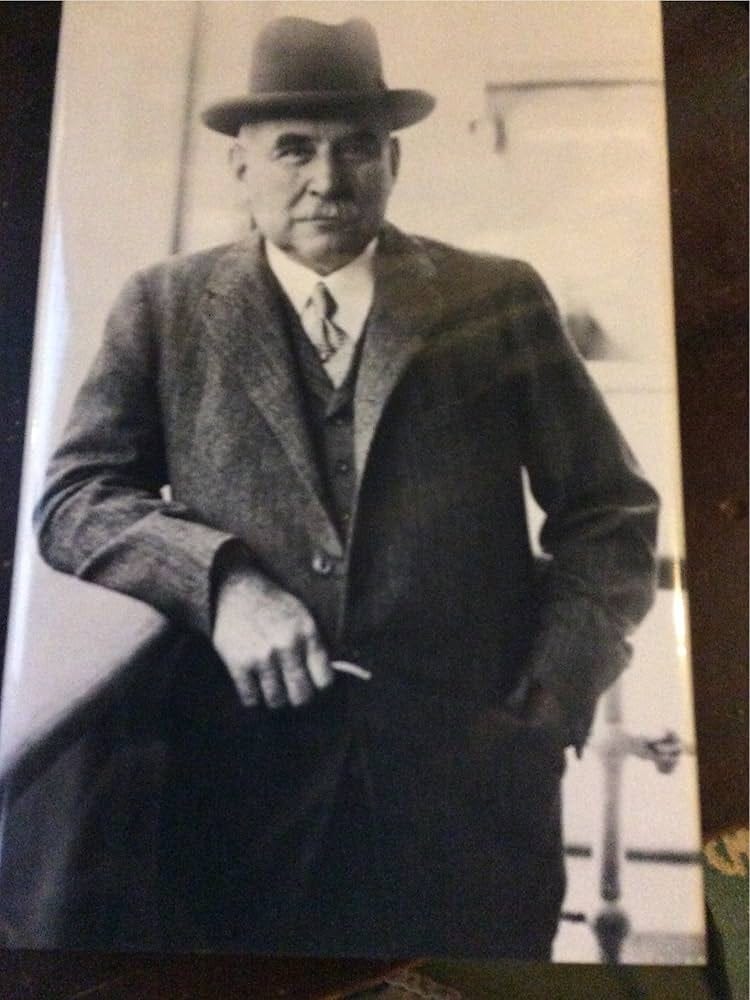
There’s nothing wrong with striving for elite status. But it’s probably not worth making it the center of gravity of your life, because maintaining it offers no cure for oblivion.
The wealth
Spend less than you earn. Avoid debt. Invest in a diversified portfolio. They’re the building blocks of wealth creation and maintenance. Simple though not easy.
And more money doesn’t necessarily make it any easier.
For many people who become rich, instead of finding some nirvana of ease, they find the opposite: a life of even greater demands and a higher level of fear. The higher you rise, the stronger the vertigo of wealth — a fear of losing it.
As Nathan Mayer Rothschild put it:
“It takes a great deal of boldness and a great deal of caution to make a great fortune; and when you have got it, it requires ten times as much wit to keep it.”
Sure, it’s a nice problem to have. Still, while most of us won’t have Rothschild money, the same maintenance principle applies. The same intention that made the wealth is necessary to manage it. It brings to mind The Sun Also Rises, in which Ernest Hemingway writes of a man who lost his fortune: “How did you go bankrupt? Two ways. Gradually, then suddenly.”
The relationships
Hardest of all to maintain are the grains of sand slipping through our fingers as we age: relationships.
Maybe at a time when we need people more than ever, there are simply fewer relationships left to maintain. Surveys show the percentage of U.S. adults who report having no close friends has quadrupled to 12% since 1990, while the percentage of those with 10 or more close friends has fallen by nearly threefold.
There’s only one graph that goes up and to the right…
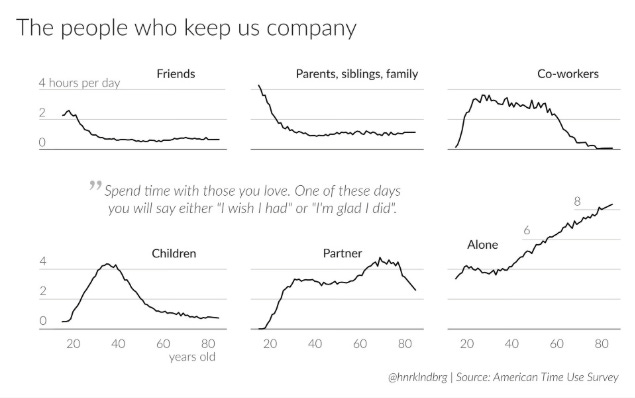
As an 85+-year Harvard study has shown, what makes us most happy in life is close relationships — more than wealth or career success. If you have no one to share this life with, all the other things you fill it with can start to feel meaningless.
But that’s not the whole story. Take a long glance at your past and you’ll see it populated by many people who were invested in maintaining the machine that is you.
The time
Ticking in the background of all of this is the maintenance of time. Are you living in the past, living for the present or sacrificing for the future?
A challenge in the maintenance of time is our tendency to value the present more — present bias. It’s the yearning for instant gratification. Although you could argue that many people do a poor job of maintaining the present, lost in devices, burdened with regrets about the past and held back by fears about the future.
Ultimately, whether it’s wealth, skills or health, the life we hope to maintain later is built through the dirty work done today — the quiet sacrifices required to maintain the future. Someone has to wash the dishes.
St. Mother Teresa put it well when she said:
“Wash the dishes not because they are dirty, nor because you are told to wash them, but because you love the person who will use them next.”
Chances are, the next person is you.
The why
And now we arrive at the question: what is any of this for — the money, the work, the being?
Brand writes about the paradox of our struggle to accept the requirement of maintenance:
“But so much of doing maintenance is tiresome. Brush the damn teeth, change the damn oil. They are unrewarding chores—repetitive, boring, often frustrating, and endless. Since that part of maintenance is a pain, we shirk it, defer it, fail to budget time or money for it, let it drop to the bottom of the priority list. That’s easy to do because the necessity of maintenance accumulates invisibly and gradually. Then suddenly one day the thing breaks, the system falters, and everything stops in a turmoil of disruption, expense, and blame.
The apparent paradox is profound: Maintenance is absolutely necessary and maintenance is optional. It is easy to put off, and yet it has to be done. Defer now, regret later.
Here’s a suggestion: Soften the paradox and the misbehavior it encourages by expanding the term “maintenance” beyond referring only to preventive maintenance to stave off the trauma of repair—brushing the damn teeth, etc. Let “maintenance” mean the whole grand process of keeping a thing going.”
In a way it echoes the philosophy of Aristotle, who believed meaning in life comes from activity, not outcomes.
There’s no escaping maintenance, whether rich or poor. The meaning you derive from it doesn’t come from escaping it, but from how you face it.
Again, “let ‘maintenance’ mean the whole grand process of keeping a thing going.”
What makes a good life is subjective. True, being wealthier is often associated with greater happiness.
But isn’t doing what you can to simply live a full life still pretty good in light of the gift of life itself?
Having confronted death several times in the form of cancer, writer Suleika Jaouad eloquently describes the beauty of life in both small and big acts:
“We do routine things, and we do things that require acts of imagination that we’re never going to do again, whether it’s naming a goldfish or responding to a stranger tripping over a curb. Toggling between such routine experiences and unique ones are what, in the aggregate, constitute, a life.”
So, if you feel overwhelmed by the pressure to strive to be rich, or burned out by all the “maxxing”, or disappointed that you might not reach a certain level of wealth or perceived success, just remember:
It’s all maintenance.
To have to do maintenance is a chore, but to not have to do maintenance is death.
It takes a lot of work just to keep a life going. To do so to its natural end is to have run — or sailed — a pretty good race.
Notes to my future self:
We bring nothing into the world, and we take nothing out of it. Over the course of a life, we’re just maintaining things.
Ultimately, whether it’s wealth, skills or health, the life we hope to maintain later is built through the dirty work done today — the quiet sacrifices required to maintain the future. Someone has to wash the dishes.
There’s no escaping maintenance, whether rich or poor. The meaning you derive from it doesn’t come from escaping it, but from how you face it.
With gratitude,
J.S.
Agree with the study that showed “Happiness comes through close relationships” and to balance days with personal connections, chores, reading, sleep is fulfilling each day. The joy of the moment is to find an original perspective that relates to each moment, each task, each organization, each person. Inquiry celebrates discovery of uniqueness with close friends and find new friends through remaining open to conversation.
This is inspiring. The thoughts are very well structured and the idea is nothing short of beautiful. Just extending your idea, is 'Writing' the act of maintaining one's 'thinking ability' or one's 'Ideas'? People keep pushing down writing a journal, a personal diary, notes or essays similar to other chores. Writing is a chore, but the most important one, because it is the act of maintaining your intelligence.