
Friday Unwind 006
Don't Read This Link List

Ladies and gentlemen, it’s the weekend —
If you need something to occupy your mind, here are a few things I’ve been thinking about lately:
The story of Patagonia’s ‘Don’t Buy This Jacket’ ad
I highly enjoyed Yvon Chouinard’s memoir/business book, Let My People Go Surfing, so I look forward to reading the biography, Dirtbag Billionaire, soon. In the meantime, it was great to read David Gelles’s short history of this classic Patagonia ad:
The response was instantaneous. Trade publications lauded the ad as a brilliantly subversive bit of marketing, using the allure of the taboo to encourage people to buy yet more of Patagonia’s gear. Mainstream media outlets wrote news stories about the ad, and business schools created case studies about it.
“For that $57,000 ad in The New York Times, we got $40 million to $50 million of free publicity,” Casey Sheahan, who was CEO of the Patagonia at the time, told me.
Creating an effective brand message
Even the biggest, most successful brands struggle with messaging. This post by Anil Dash offers some great communication writing tips.
They have to be able to talk about us without us. What this phrase means, in its simplest form, is that you have to tell a story so clear, so concise, so memorable and evocative that people can repeat it for you even after you’ve left the room. And the people who hear it need to be able to do this the first time they hear the story.
How the sports stadium went luxe
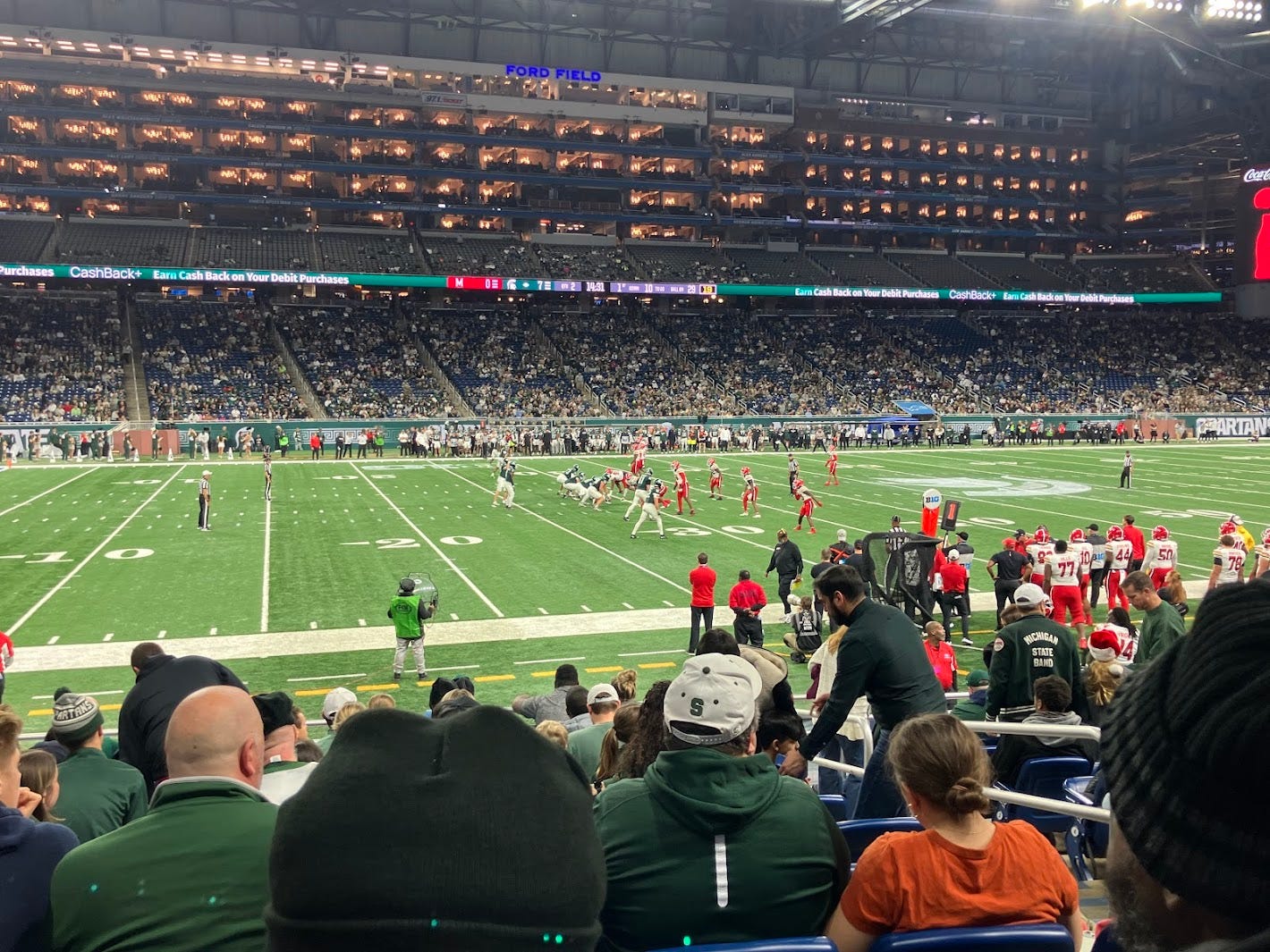
Recently, I scored free tickets to a college football game at Ford Field, where the Detroit Lions play. Again, the tickets were free. I still spent a small fortune. How is this sustainable or enjoyable for anyone?
My seat was comfy, but I rarely got out of it. I looked enviously at the concertgoers above me in the cheaper seats leaping up and down and dancing. That’s the best part of the fan experience: getting so caught up in the emotion that you feel at one with the crowd. But no one was sporting assless chaps in our suite. Suites are for corporate schmoozing and sips and bites, not bonkers fandom. Money prefers quiet; it’s more civilized.
Hayao Miyazaki: 9 Creative Lessons
As a longtime Studio Ghibli and Miyazaki fan, I was thrilled to see Trung Phan turn his keen attention to the master animator and director.
Miyazaki shows up mid-meeting and is not happy with the decision to pause work. The office is far from the epicentre of the earthquake and he says that countless other people — especially the emergency first responders — are still on the job.
“Why all the commotion?” he asks his team. “We’ve got to keep working. We can’t change the release date. We’re working hard to meet in. We must go on, even if it is hard. I think just leaving the production site is wrong. I can’t accept that at all. It’s precisely in times like this, that we must spin a myth. To show that we kept drawing despite any aftershocks.”
Two Cents: Anne Lamott on Writing
Perfectionism is a mean, frozen form of idealism, while messes are the artist’s true friend. What people somehow (inadvertently, I’m sure) forgot to mention when we were children was that we need to make messes in order to find out who we are and why we are here — and, by extension, what we’re supposed to be writing.
To be a good writer, you not only have to write a great deal but you have to care. You do not have to have a complicated moral philosophy. But a writer always tries, I think, to be a part of the solution, to understand a little about life and to pass this on.